July 18 & 19: 2026 Vermont Christian Harmony Double All Day
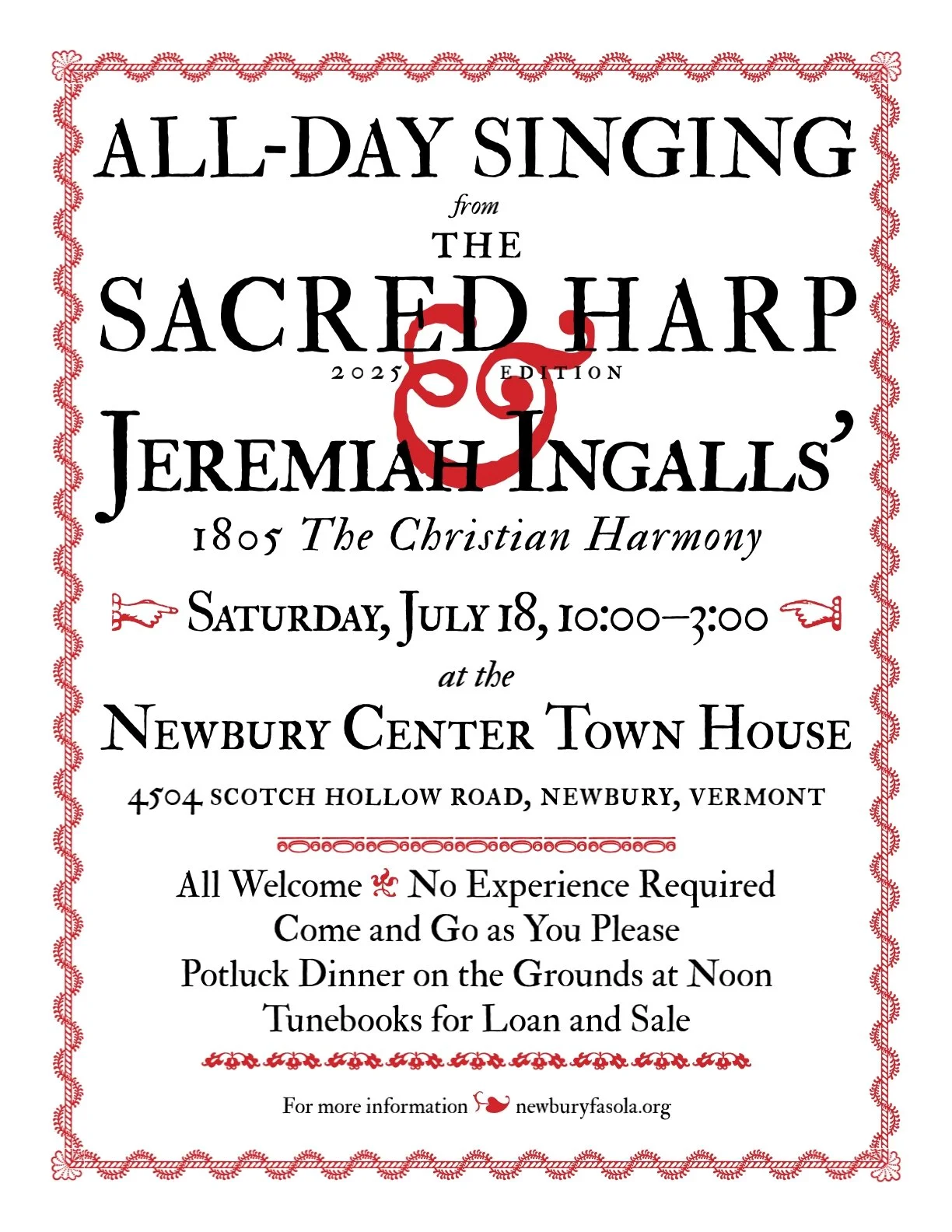
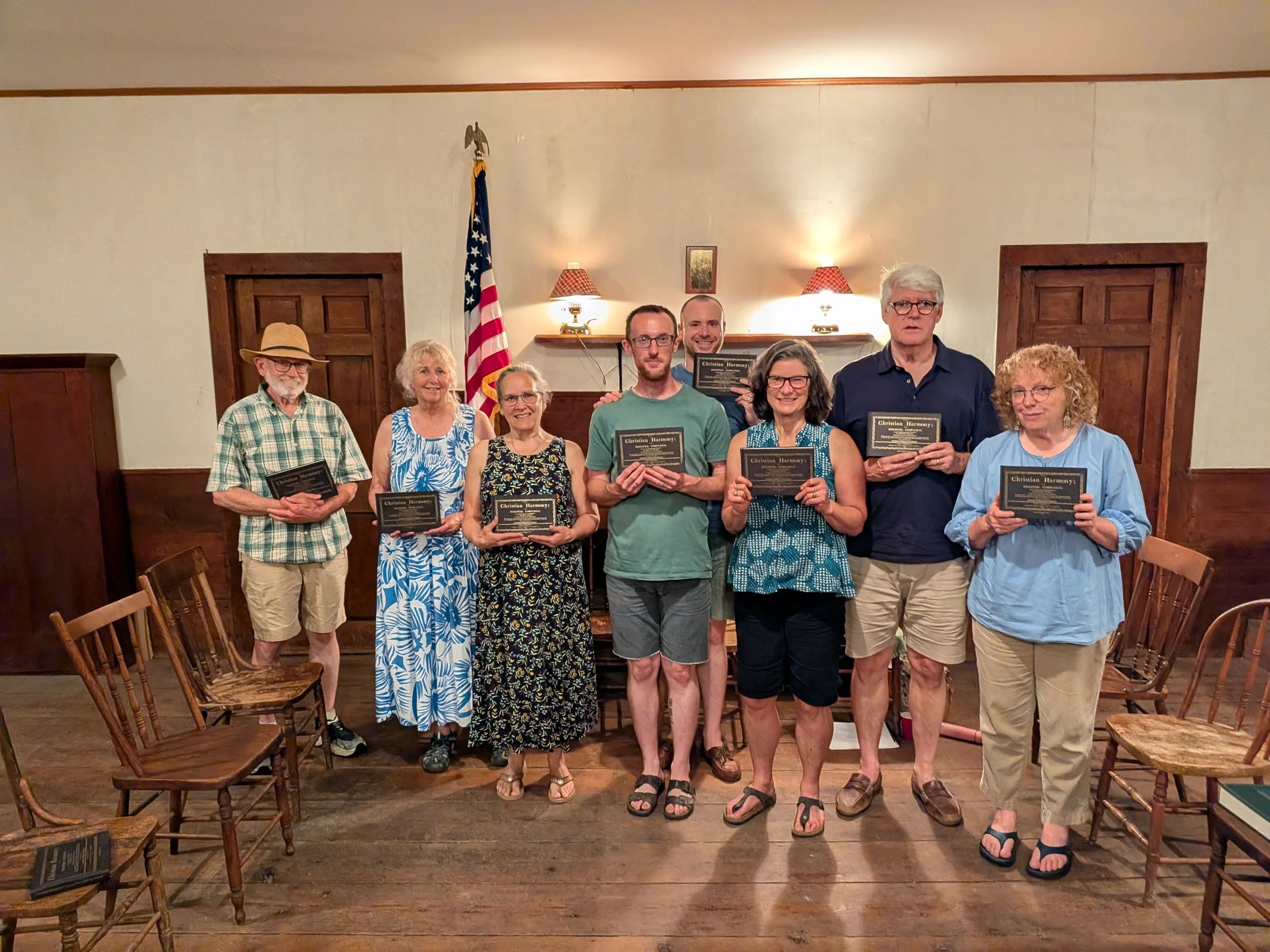
1720 brought singing schools, singing masters, and eventually composers and compilers of tunebooks. One of those composers/ compilers, at the time of the founding of the United States and the state of Vermont, was Jeremiah Ingalls of Newbury. We celebrate our heritage with the joy of singing Ingalls songs from his tunebook, The Christian Harmony, newly reprinted. Singing will be at a Newbury Town House a meeting house of about Ingalls vintage) on Saturday, the 18th of July.
Sponsors
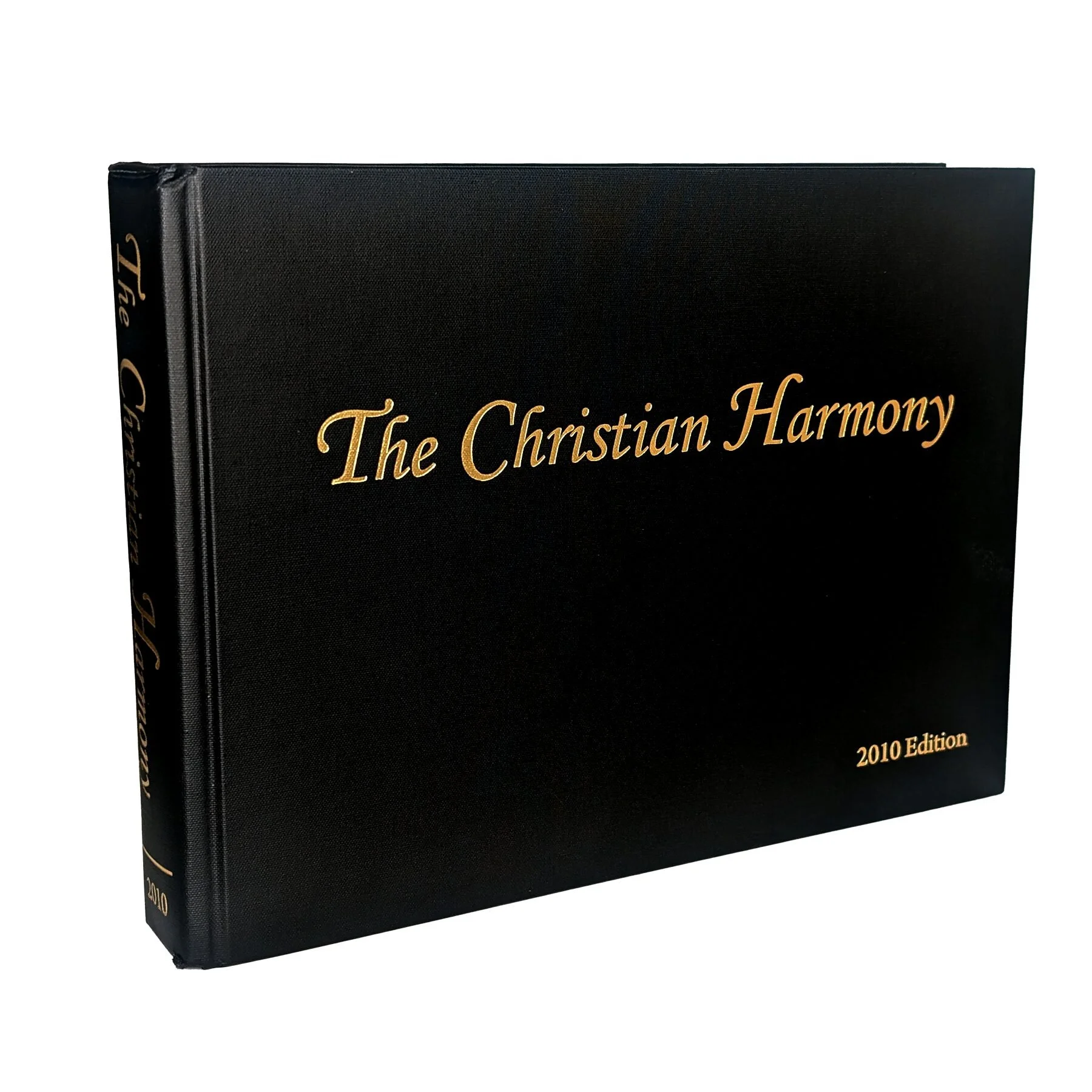
For the second year, we will follow the Ingalls Christian Harmony singing with a singing from the Walker Christian Harmony
The Walker Christian Harmony All-Day Singing will be held at the Haybarn Theater, Creative Campus at Goddard in Plainfield. 10-3 on Sunday the 19th of July.
Free and open to the public. No experience necessary.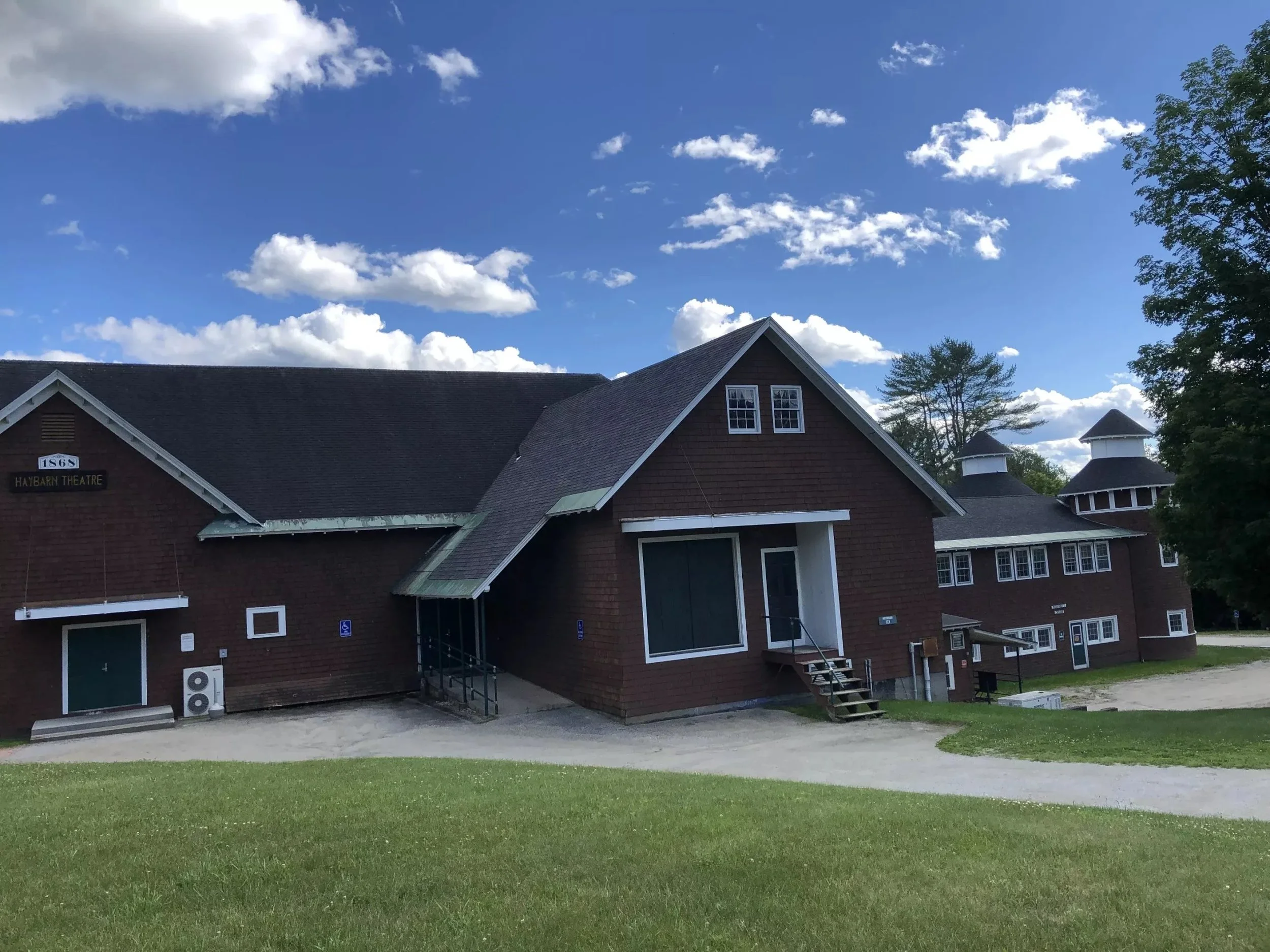
We will have a limited supply of loaner books. Please bring your own if you have a copy and any loaners you may have available.
Registration will begin at 9:30.
We will have lunch at noon. Please provide your own lunch or sign up for pizza at registration.
Sponsors
Past Exhibits and Events

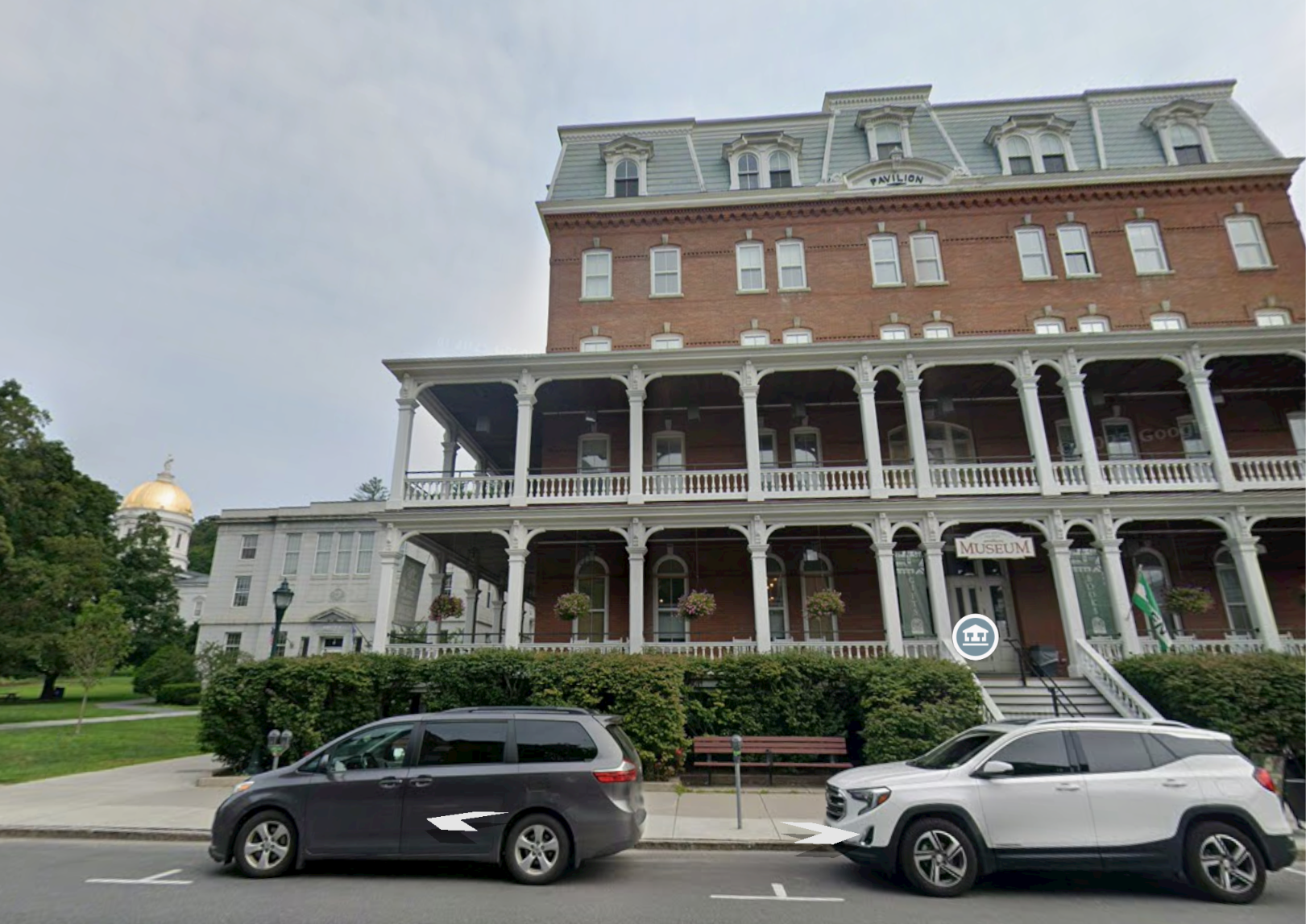
Vermont History Museum, Montpilier August to December 2025
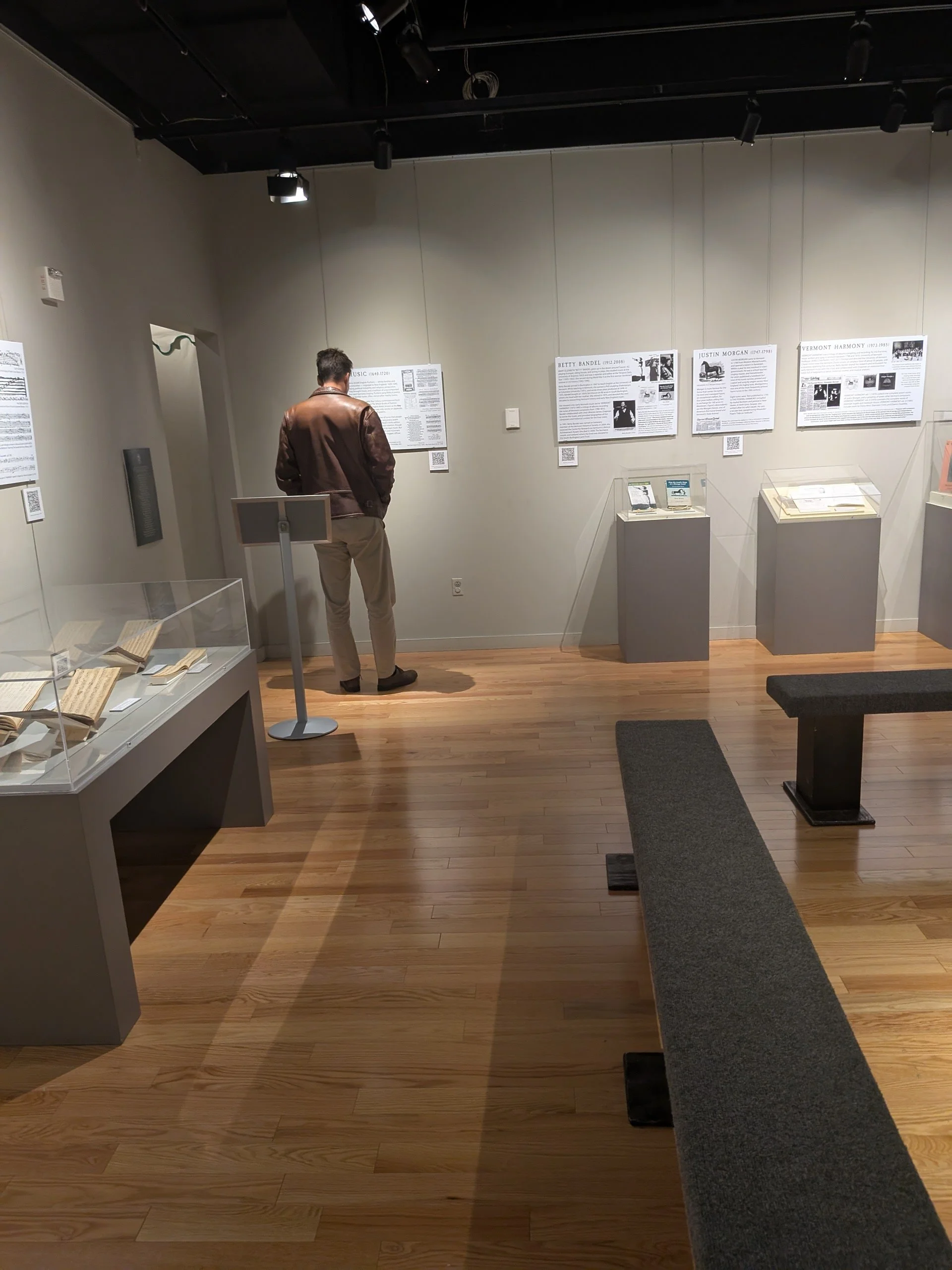
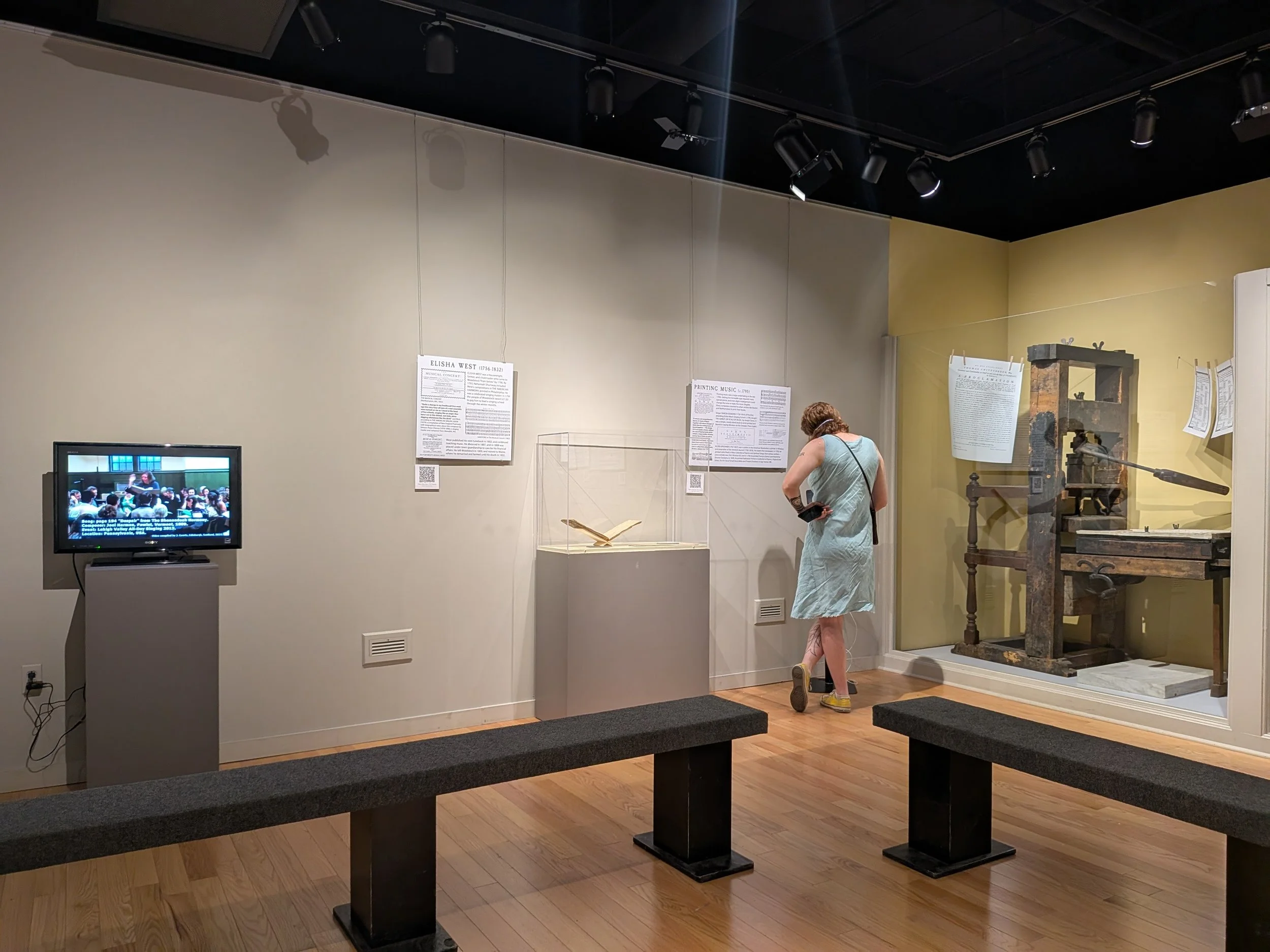
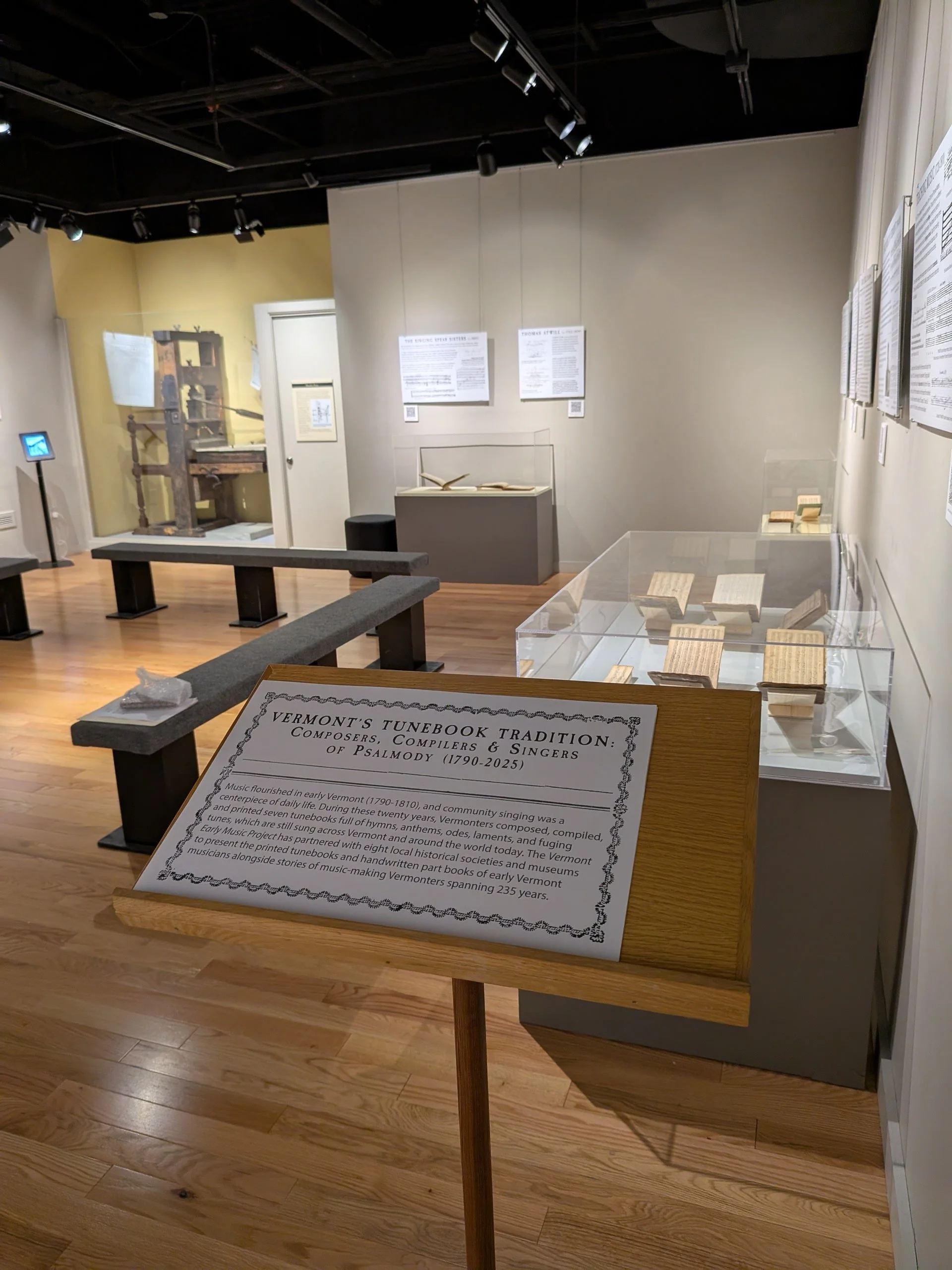
"Vermont's Tunebook Tradition: Composers, Compilers & Singers of Psalmody (1790-2025)"
Guests will find printed music and hand written or manuscript music from early Vermont.
Music flourished in early Vermont (1790-1810), and community singing was a centerpiece of daily life. During these twenty years, Vermonters composed, compiled, and printed seven tunebooks full of hymns, anthems, odes, laments, and fuging tunes, which are still sung across Vermont and around the world today. The Vermont Early Music Project has partnered with eight local historical societies and museums to present the printed tunebooks and handwritten part books of early Vermont musicians alongside stories of music-making Vermonters spanning 235 years.


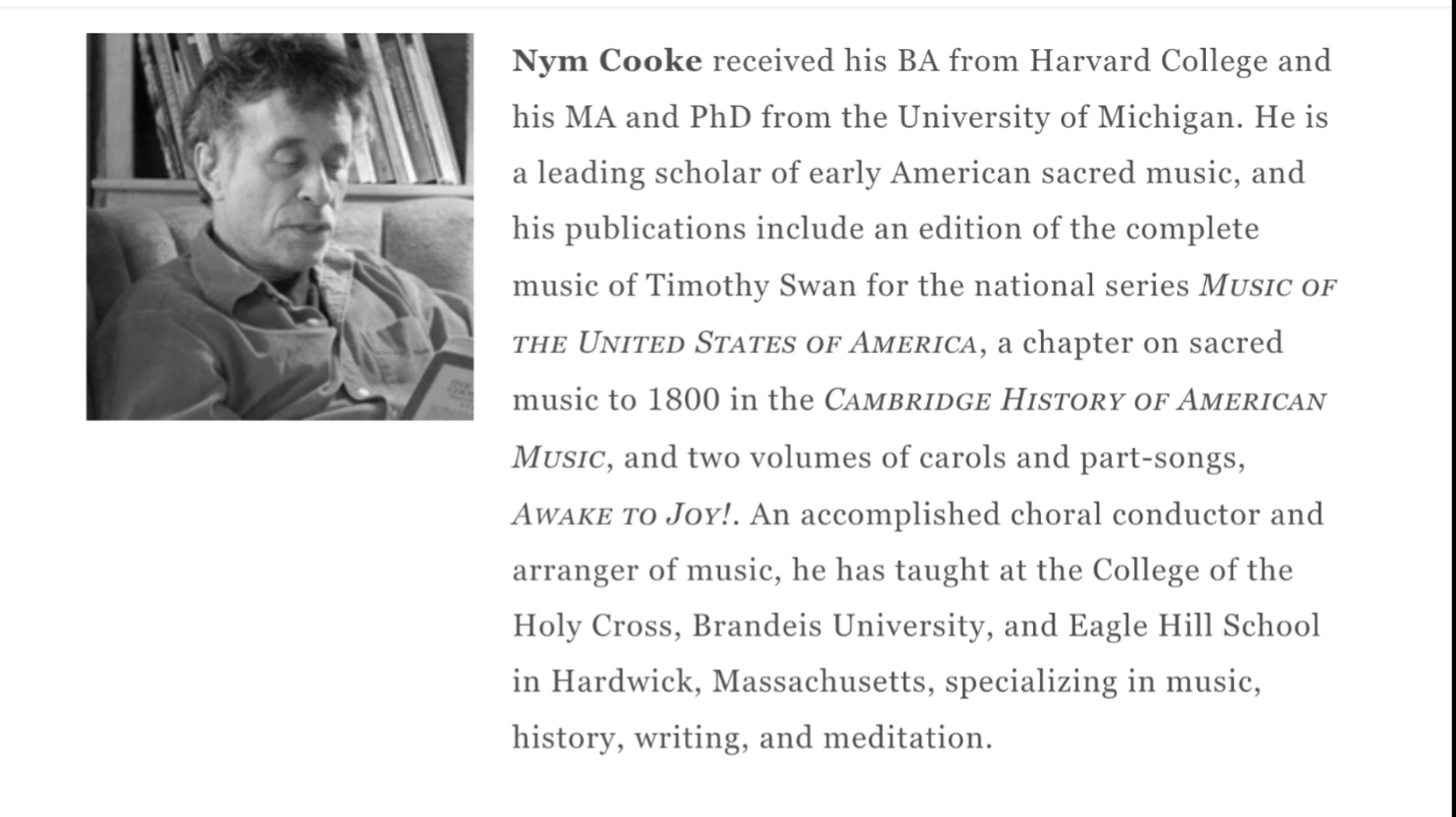
Review From Nym Cooke:
¨A 45-minute visit to Vermont's Tunebook Tradition, put together by my friend the indefatigable connector of people, projects, and history Kerry Cullinan, left me highly impressed. It's attractive, it's accurate, it draws you in, and it points out some telling interrelationships between tunebooks and the people who compiled and used them. This is the deepest dive I've yet seen into bringing together documents and recordings related to a specific region's activities in early American psalmody, and it's informative on the level of both printed tunebooks and manuscripts. Vermont's Tunebook Tradition rightly pays homage to Betty Bandel (1912-2008), who did more than anyone else in the 20th century to open up the sacred music and musicians of the Green Mountain State for study and enjoyment through Vermont Harmony, a series of recordings with extensive notes that Betty produced in collaboration with James Chapman. Another praiseworthy aspect of the exhibit is the inclusion of recordings--both audio and video--of shape-note singers bringing some of the best early Vermont music to life. The exhibit's up through December; don't miss it!¨
"Important display and content."
Mark Sustic, Educator and past director of Young Traditions Vermont".
“…presented loads of information in a clear and concise fashion. I was happy to see you had some of the “tech” pieces you were hoping to incorporate. Even more impressive was the number of different organizations you got to collaborate with you. Thanks for all your time and effort to bring this exhibit to fruition; this is a great model of what is possible when the collections of different repositories are brought together.”
Rachel Onuf, Vermont Historical Records Program Director, Vermont State Archives