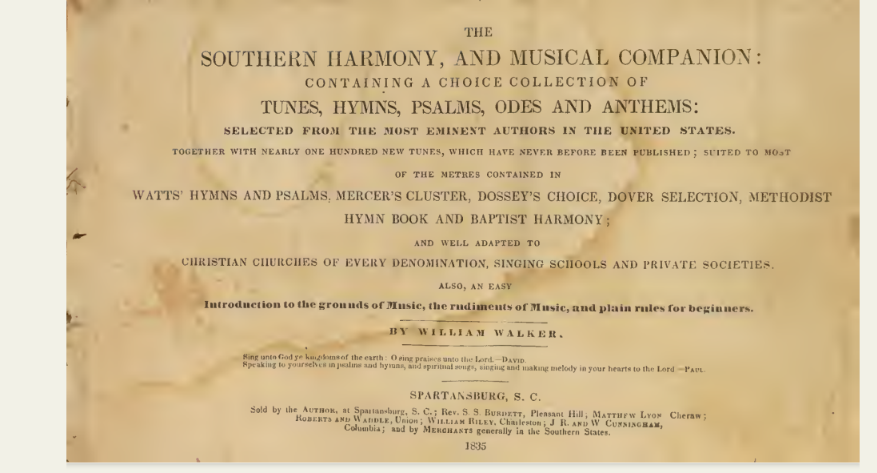
Connecting Western Liturgical Music Development to the 1698 Bay Psalm Book
Pre 1020
Codification from Oral Traditions
The first written Western music began with neumes (squiggles indicating melodic shape) around the 9th century, used for Gregorian chants under Charlemagne, pushing memory-based transmission to a more standardized system, with firmer pitch notation emerging in the 11th century (Guido of Arezzo) and rhythmic notation by the 12th-13th centuries (Notre-Dame School). Early manuscripts like the Laon Gradual and Cantatorium of St. Gall (late 9th/early 10th century) are among the oldest examples.
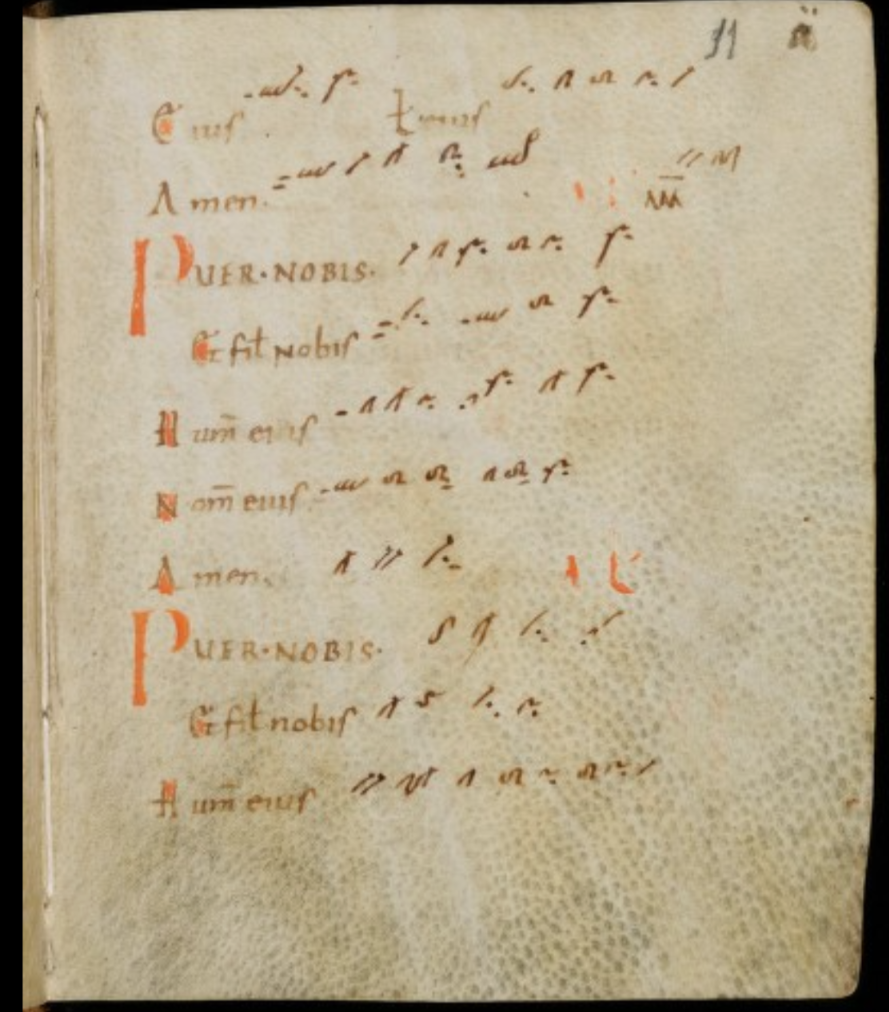
Codex 484 from the Abbey of Saint Gaul in Switzerland.ca. 925-950
Sydney Conservatorium of Music: Alfred Hook Lecture Series, Mysteries of Gregorian Chant Revealed . Neil McEwen, AM
1020
The Major Leap from Oral to Written Musical Culture
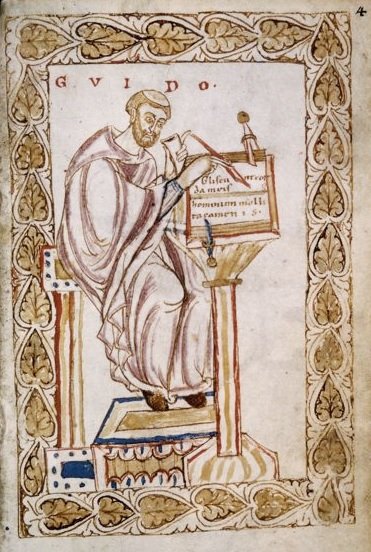
~1026 - Guido of Arezzo compiles his treatise Micrologus (“little book”), which includes the earliest use of staff notation, clefs (C and F), and accidentals (only B flat and B natural). He also introduces solfege using the six syllables ut, re, mi, fa, sol, and la.
1020
~1200 - Manuscripts produced at the Notre Dame Cathedral in Paris contain the first attempt to notate rhythm. However, the system used in this music is not a predecessor to modern rhythmic notation. It uses patterns of ligatures (note groupings) to indicate one of six modal rhythms, which are fixed rhythmic patterns. The appearance of an individual notehead tells the musicians nothing about its duration.
~1315 - Treatises by Johannes de Muris (Ars nove music, or “new art of music”) and Phillipe de Vitry (Ars nova notandi, or “new art of notation”) expand on Franco’s system, introducing new noteheads that indicate longer and shorter durations. They also develop the concept of meter and an accompanying system of time signatures. Composers in this era begin using flats, naturals, and sharps on pitches other than B, a practice termed musica ficta (“fictional music”) because these pitches do not exist in Guido’s system.
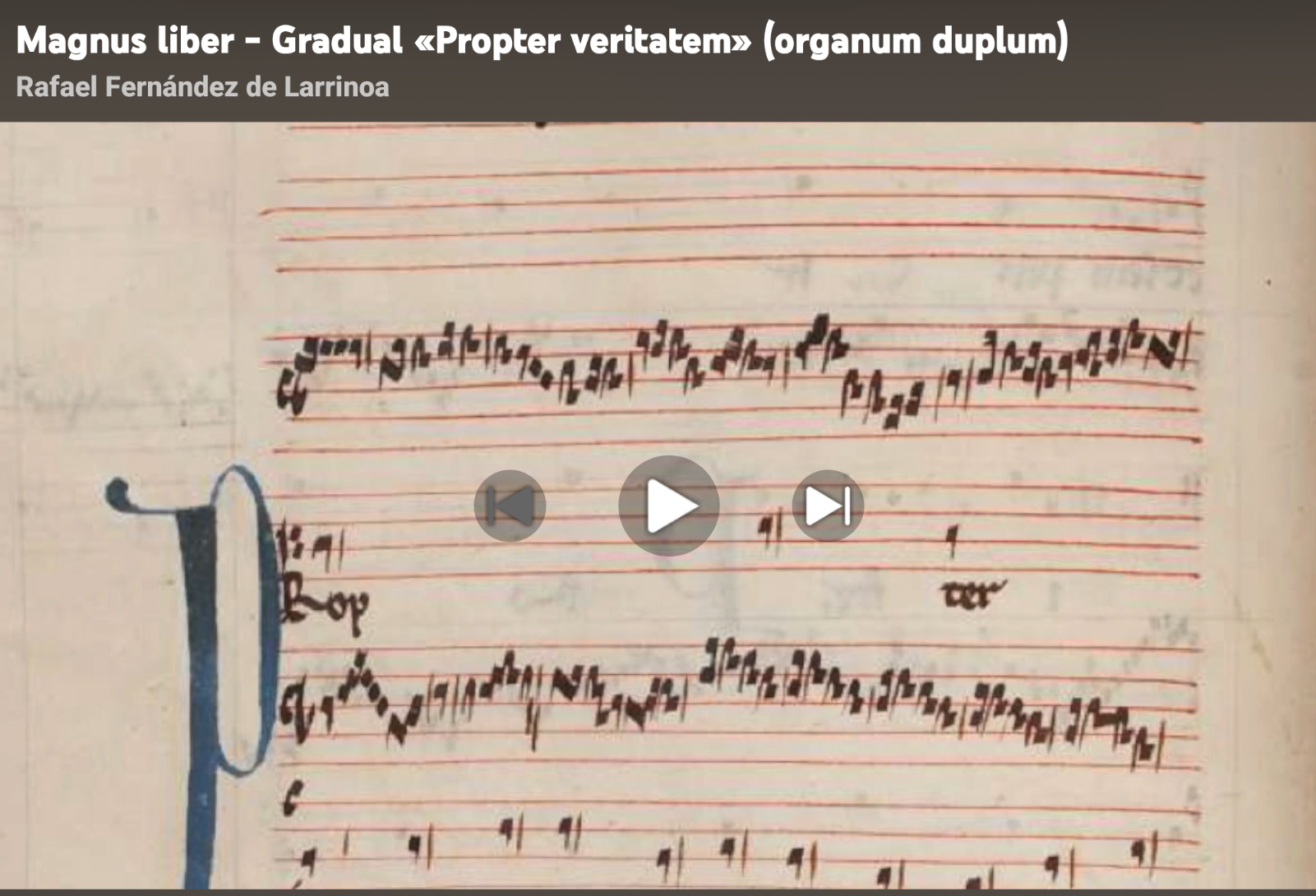
~1400 - Composers begin to use bar lines, although they will not become common until around 1650.
~1280 - Franco of Cologe compiles his treatise Ars cantus mensurabilis (“art of measured song”), which includes the first system of rhythmic notation that uses variation in the appearance of noteheads to indicate duration. This is referred to as “mensural notation.”
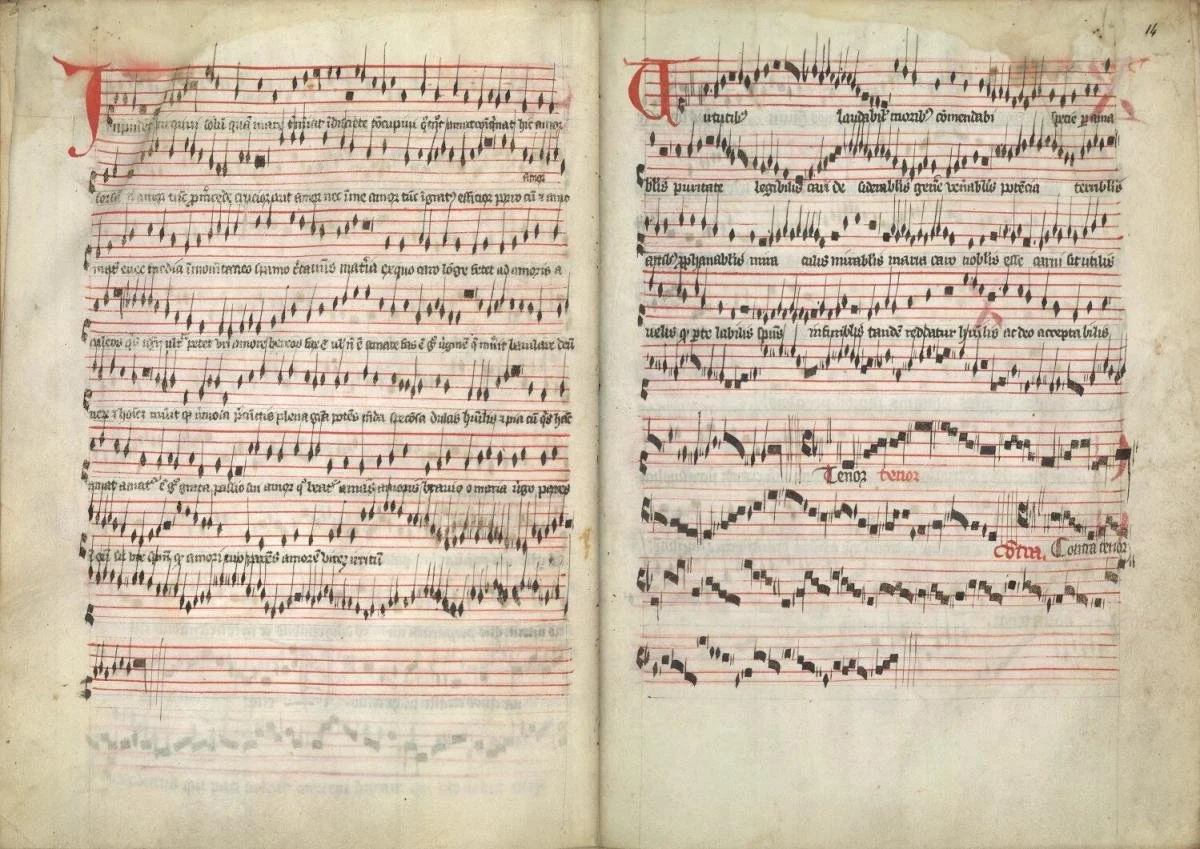
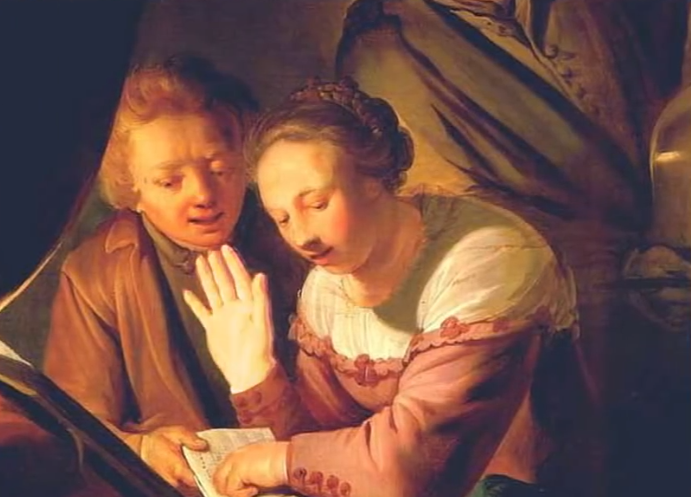
Tactus or Beating Time in the 16th Century
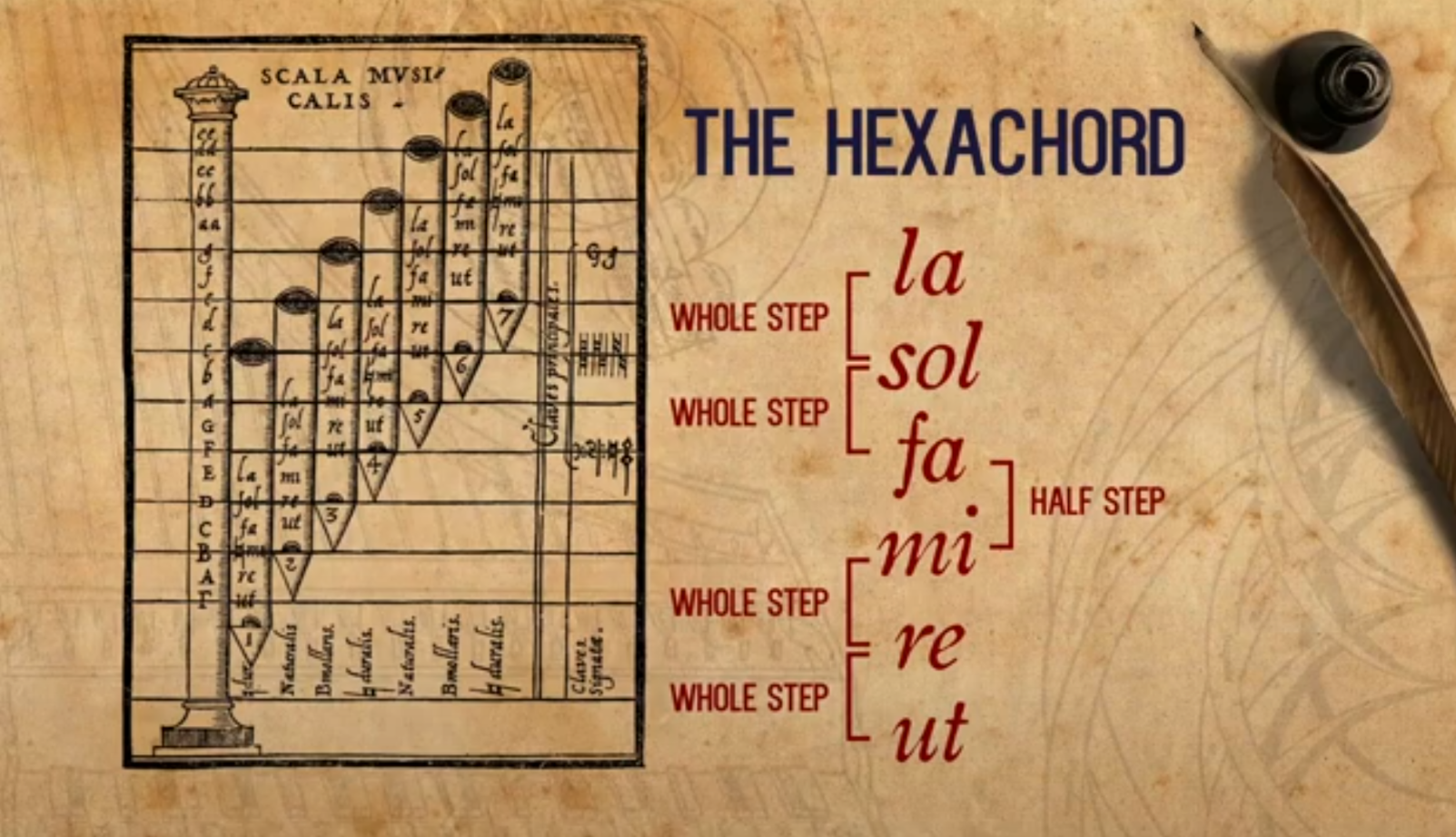
Solmization in the 16th Century

1620
When the Pilgrims landed on the North American continent in 1620, they carried with him a psalter or psalmbook created and published by Henry Ainsworth in 1612 - The Book of Psalms. There are 48 plainchant tunes in this book. Since nine are duplicates, 39 is the total of unique melodies.
1698
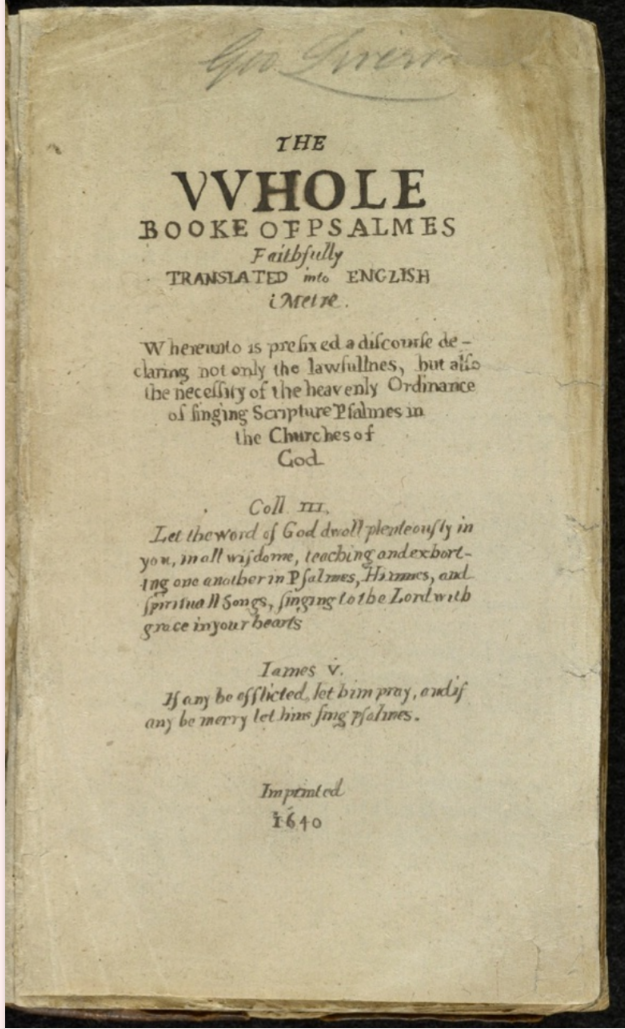
The Puritans arrived on the North American continent in 1630. For a variety of reasons, they decided to create their own psalter which was styled The Whole Book of Psalms but is commonly known as The Bay Psalm Book. To make this book available, the pilgrims shipped over a printing press from England and printed their first book in 1640. It was not until 1698, however, that a revision of The Bay Psalm Book contained printed tunes. These 13 tunes were likely taken from, John Playford's 1674 or 1679 edition of A Brief Introduction to the Skill of Musick.
1720
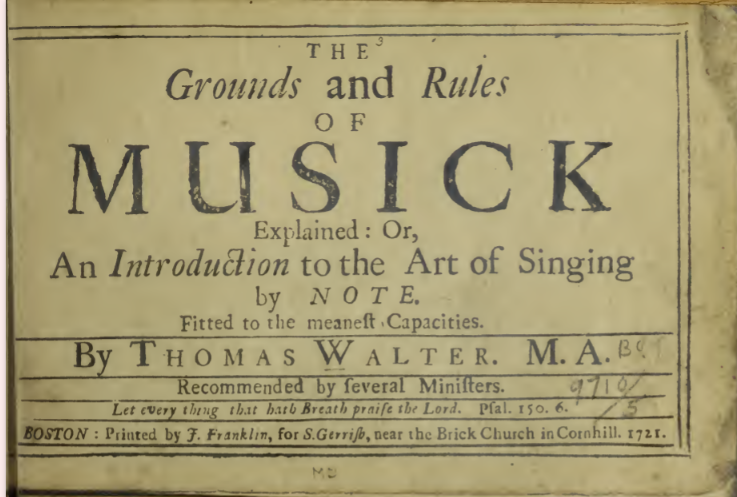
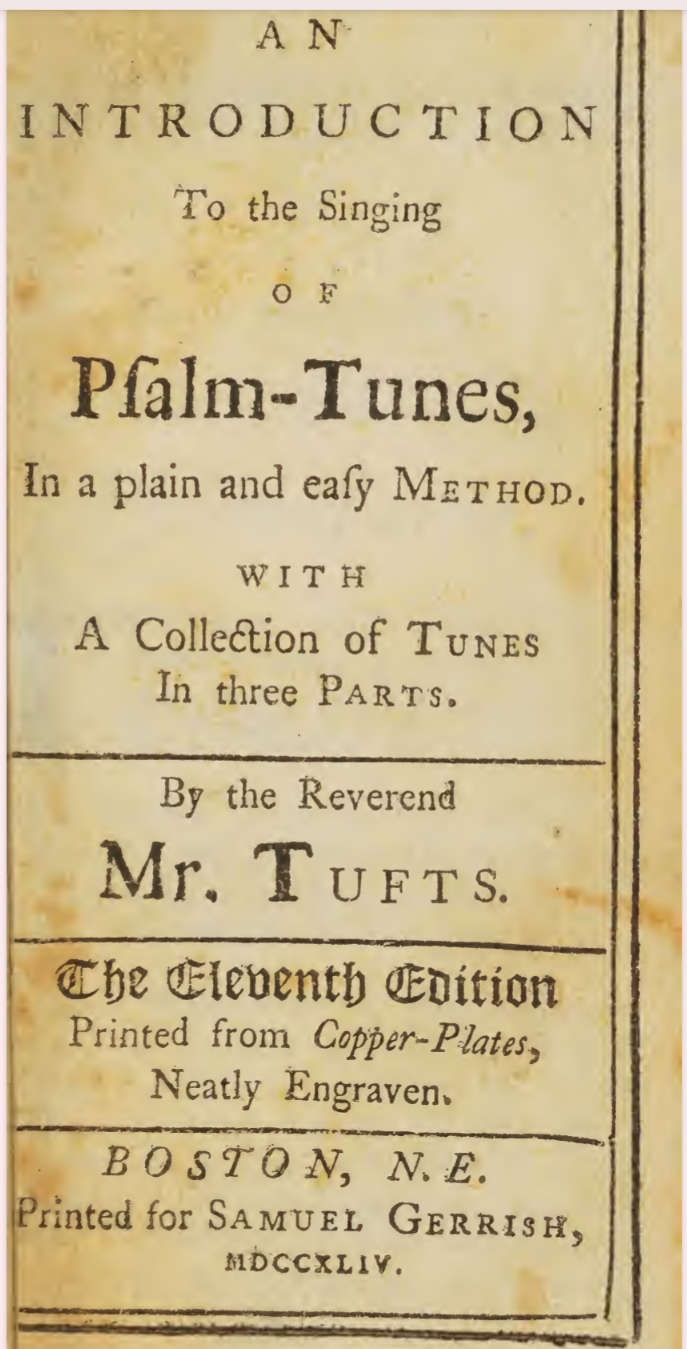
Toward the end of the 17th century influential figures, decrying the poor singing of church congregations began a lively conversation considering their belief that learning to read music was the way forward this was staunchly opposed by many but over time generally accepted. Two books of particular note at this time where those of John Tuft and Thomas Walter.
1770
1840